


Notes from The Workshop
Essays, Insights & Reflections on the Art & Practice of Authentic Okinawan Karate & Kobujutsu
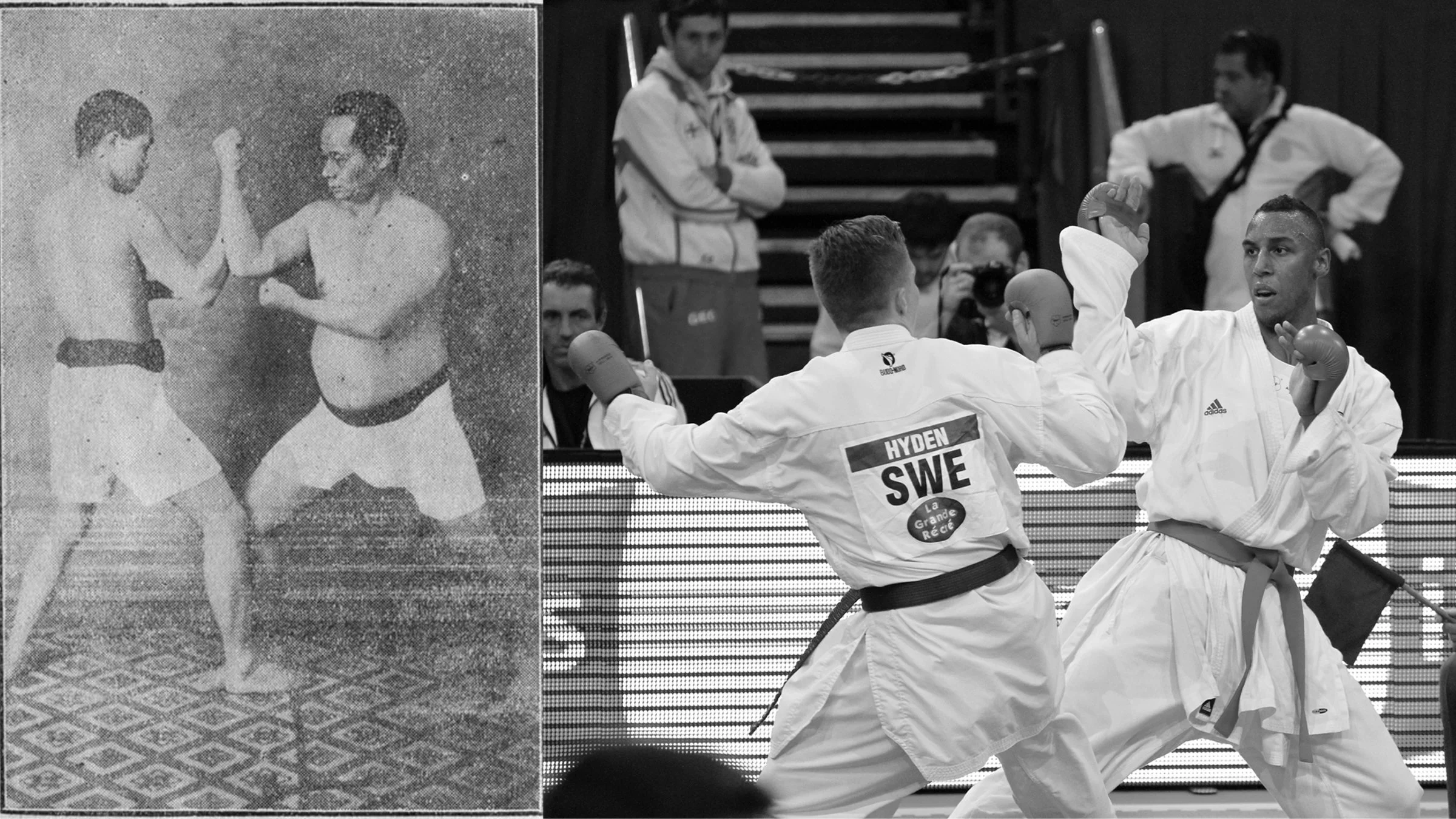
024 — From Ti to Trophies: What Happened to Real Karate?
Most Karate taught to adults today is essentially children’s Karate.
This is not a criticism of training for children, but of applying that same training to adults without progression.
Somewhere along the way, Karate did not lose its power; it lost its purpose. What remains is often not the full art, but an introduction mistaken for completion.
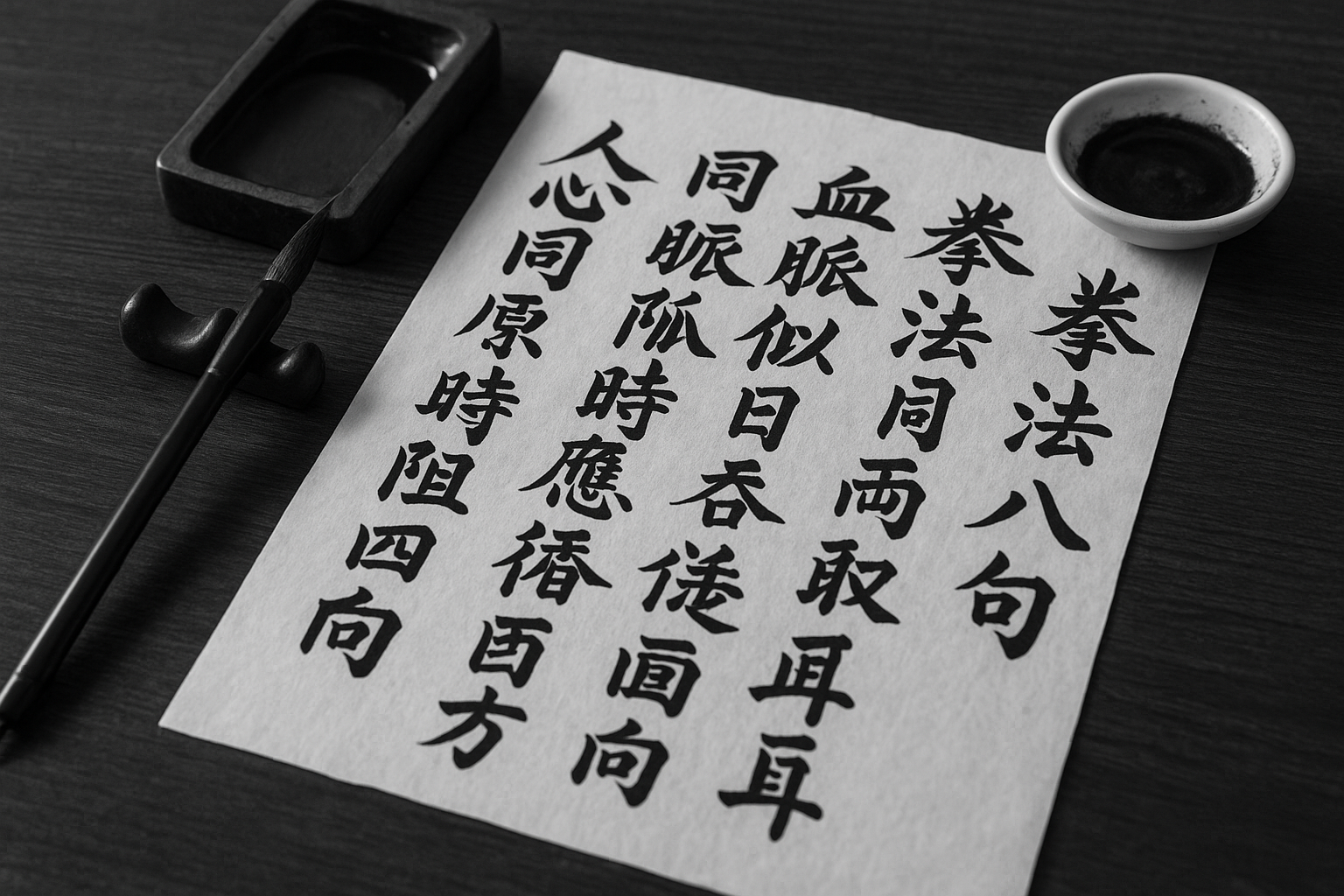
023 — The Eight Precepts of the Fist: A Commentary
Among the many relics of early Karate, none is more revered or mysterious than the Bubishi—a hand-copied manual brought from southern China to Okinawa over a century ago. More than a martial text, it was a guide to living, joining combat technique with philosophy, medicine, and ethics. Hidden within its pages is a brief poem of eight lines: the Kenpō Hakkō—The Eight Precepts of the Fist.
These verses express the essence of Karate as harmony rather than conflict: aligning the human spirit with nature, balancing hardness and softness, acting in accordance with circumstance, and seeing and listening with clarity. This commentary explores the Kenpō Hakkō as Okinawan masters may have understood it—not as esoteric poetry, but as a practical philosophy for living with balance and harmony both in training and in life.

022 — Stop Shouting "Kiai": It Isn't Something You Say, It's Something You Do
Scroll YouTube and you’ll see it: karateka yelling “KIAI!” as if naming the act makes it real. This article explains what kiai actually is—the unification of breath, body, and will—how codified performance eclipsed Okinawan practice, and why a true kiai should arise naturally, not be recited.
021 — Death in the Dōjō: The Paradox of Authentic Karate
In the dōjō, we face death quietly, honestly. Karate teaches decisive harm—"for life and death," as Miyagi said—but just as the dōjōkun directs us to practice earnestly, it also instructs us to take care of our health. Trust makes both of these possible: our partners place themselves in danger so we may develop our skills. These same motions that can injure also strengthen; the same breath used when striking also restores. Authentic Karate is a paradox—the study of destruction that preserves life—challenging us to accept our mortality and, in doing so, to live more fully and well.

020 — Kata & Counting: Its Architecture, Rhythm, and Meaning
Kata is not meant to be tallied step by step, yet too often it is reduced to numbers—ichi, ni, san—fracturing its rhythm and meaning. Counting has value as a teaching tool, but when it dominates, kata becomes a sequence of poses instead of living strategy in motion. True Karate emerges only when the count is set aside and kata is allowed to breathe.
“No matter how you may excel in the art of Te, and in your scholastic endeavors, nothing is more important than your behavior and your humanity as observed in daily life.”
— Tei Junsoku (1663-1734)